
Workout of the Day: 4 x ( 5 x 300m )
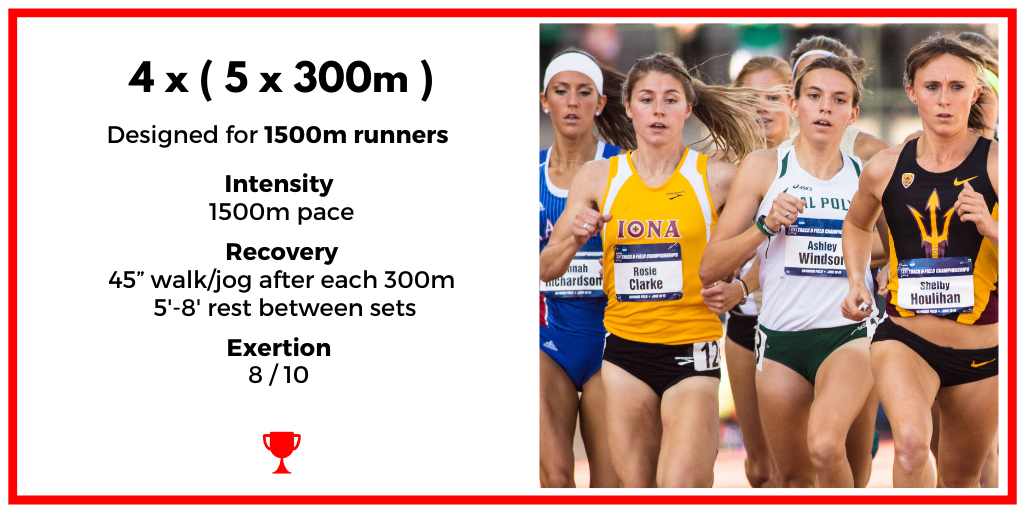
4 x ( 5 x 300m )
Intensity — 1500m pace
Recovery — 45” walk/jog after each 300m rep in a set, 5-8 minutes recovery between sets
Exertion — 8/10
Context & Details
At its core, running training is about maximizing race specific speed and fatigue resistance abilities.
Workouts ideally should aim to achieve both qualities. Sets of 5 x 300m at mile pace with 45” recoveries does this for the miler. It is a race specific speed-endurance workout in disguise.
The unique feature of 1500m training is the intense quality component of running at mile speed which enhances the nervous system to coordinate the leg muscles during faster running. Mile pace running also develops the runners’ ability to use elastic energy in their legs which permits for greater propulsive force applied with each step. This results in shorter ground contact times, which upgrades running economy. Improving economy allows for a runner to run faster and longer before the slowing effects of the fatigue set in.
Additionally, the miler must have a very high lactate-threshold velocity. Optimal training for the 1500m strives to advance the runner’s ability to cruise along for 3 minutes at mile speed with low levels of lactate flooding into the bloodstream. Moderate pace, 20 minute tempo runs provide a weak stimulus for this. Sets of 5 x 300m at mile speed off short recovery offers a stronger signal.
This workout is best performed once a week in the preparation phase and early season. When the racing schedule includes a steady diet of mile races, this workout can stop — the 1500m race takes the place of this session during the competitive season. For less experienced runners, start with 3 sets of 3 x 300m and aim to advance the volume progressively to 3 sets of 5 x 300m. Keep a strict leash on the recovery time between 300s, but not so strict that the velocities begin to deteriorate on the latter 300m reps in a set.
Upgrading and simultaneously advancing neuromuscular power, running economy, resistance to fatigue, and race specific lactate-threshold velocity allows the miler to enter the bell lap ready to unleash a more potent and longer lasting kick. Feeling less tired and excited to race on the final lap is a win-win for the miler, which hopefully will result in the win.